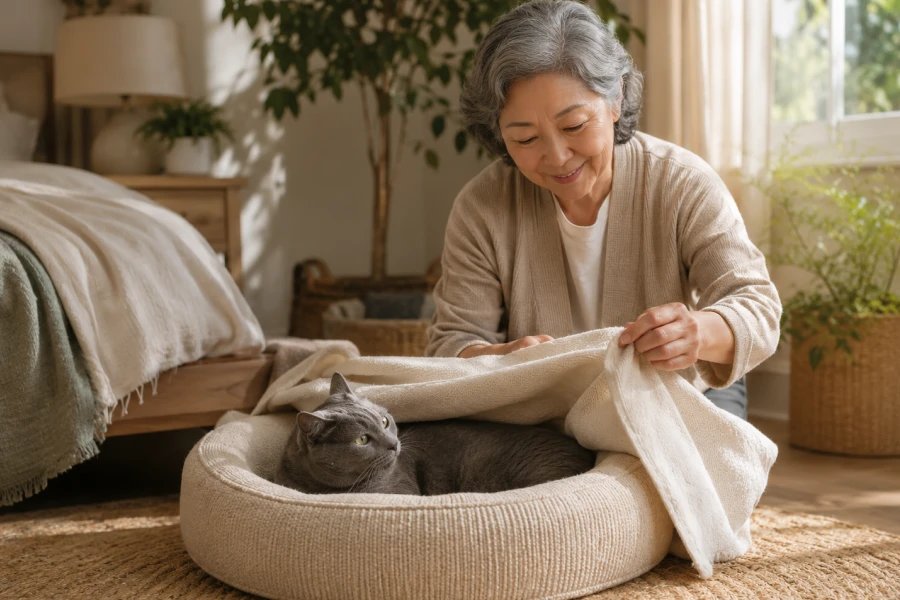
Hypoallergenic pet bedding materials can be worth considering when your pet seems uncomfortable, your home collects a lot of dander, or you simply want a gentler resting surface. Bedding touches fur, skin, paws, and sometimes sensitive noses for many hours each day. That makes fabric selection more important than it first appears. A pet bed should feel soft, remain easy to clean, and support a comfortable sleeping environment. Thoughtful materials can help reduce unnecessary irritation from rough textures, lingering odors, or difficult-to-wash fabrics. The goal is not perfection. It is a more comfortable everyday space for your pet.
Before changing a bed, observe your pet’s usual habits. Notice whether discomfort appears after naps, after washing, or during certain seasons. Look for repeated scratching, restlessness, or avoidance of a favorite bed. These signs do not automatically point to fabric, but they can encourage a closer review. Think about changes in detergents, cleaning products, or bedding materials. Small environmental details sometimes matter more than expected. Careful observation gives you useful information before you buy anything new. It also helps you explain concerns clearly to a veterinarian if needed.
Complicated finishes and heavy treatments are not always necessary for a comfortable bed. Many owners prefer pet allergy-friendly fabrics that feel breathable, easy to wash, and gentle against fur. A simple cover may be easier to maintain than a heavily textured surface. Consider how the fabric feels and smells after washing. Look for materials that do not trap excessive hair or moisture. Practical simplicity often makes it easier to create a fresh, comfortable place for your pet to rest.
Even the softest material can become less pleasant when it collects oils, fur, dirt, and dust. Regular washing helps keep bedding fresh. Choose a fabric that fits your actual cleaning schedule. A cover that takes hours to dry may be less useful than one that can be washed and returned quickly. Use a gentle detergent when appropriate and avoid overwhelming fragrances. Consistent cleaning supports both comfort and durability. It also helps you notice when a bed is beginning to wear out or hold onto odors.
A gentle fabric for sensitive pets should feel soft without becoming overly warm or difficult to clean. Consider your pet’s coat type and favorite sleeping position. Short-haired pets may notice texture more directly. Older animals may appreciate extra softness around joints. Pets with thick coats may prefer cooler, smoother surfaces. The best material depends on your animal’s individual habits. A small change in texture or breathability can make a resting spot much more appealing.
Heat can make a pet restless, especially in warmer rooms. Breathable layers allow air to move through the surface more easily. Consider the location of the bed as well. A cozy corner near a heater may need a lighter cover than a bed in a cool hallway. Layering can be useful because it lets you adjust comfort without replacing the whole bed. A washable throw or removable top layer gives you flexibility. Good airflow is not flashy, but it contributes to more relaxed everyday rest.
Some pets seek warmth all year, while others move away from plush fabrics when temperatures rise. Temperature-balanced pet bedding can help you create a more flexible setup. Use lighter materials for warm months and softer layers when the home feels chilly. Observe whether your pet moves between surfaces during the day. That behavior can tell you what feels best. Adapting the bed to the season may be more useful than choosing one heavy fabric for every situation.
Your pet may ignore a bed that looks beautiful but feels unfamiliar. Some animals prefer plush textures. Others like flat, woven surfaces. Try to notice what your pet chooses around the home. Does it sleep on rugs, blankets, sofas, or cool floors? Those preferences can guide your decision. The right bed does not need to impress anyone else. It needs to invite your pet to settle. A comfortable texture encourages consistent use and can help create a reliable resting routine.
Fabric choices may seem minor, but they shape a pet’s daily comfort. The right material can feel gentler, wash more easily, and support a cleaner resting area. Use a practical resource to compare bedding fabrics before making a decision. Explore softer bedding options for your pet and create a sleep space that feels more considered from the first nap onward.




Leave a comment